 Dream Journal Ultimate
Date: 6/29/2026
By Purple
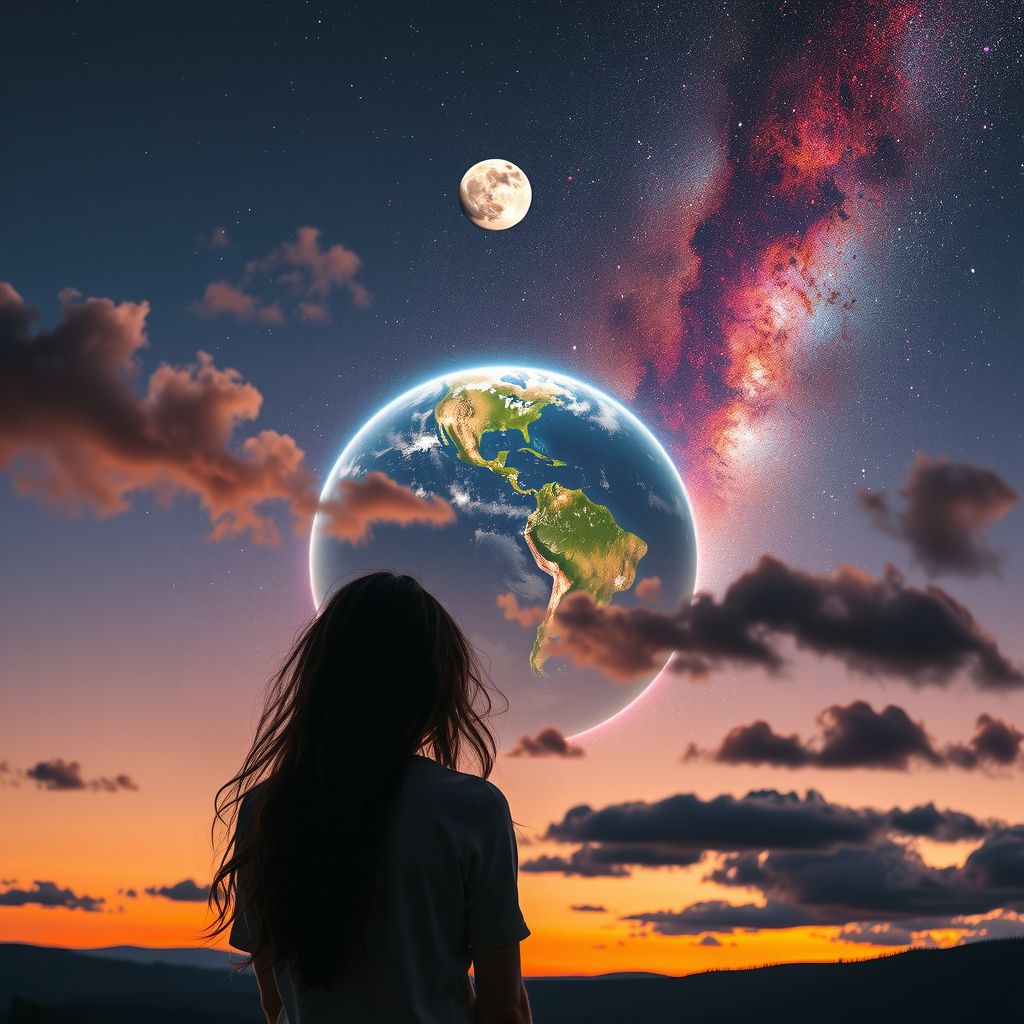
I am a woman with long brown hair. The time was between dusk and nightfall. In my dream, I was pointing out the full moon, which was really small. But I was only pointing that out in comparison to the planet directly beneath it, as that’s what I wanted to be seen. The planet strongly resembled earth, and was huge in comparison. Earth was just below the full moon, and appeared many times larger. The moon was just a tad bit larger than any stars in the sky. There were many clouds up there, but it must’ve been very windy, because the moon was constantly in and out of view. The earth was constantly in my view, since the moon and clouds were in a higher atmosphere. I don’t know who was in my company, but I’m guessing it was a friend. I was super impressed with what I was seeing, and although I was tired, I stayed awake in expectation of what was to come next. I was not disappointed. The sky became a light show, almost like lightning…not knowing where to focus on. I saw various constellations, astrological signs, and other combinations that were too fast for me to make out what they may have been. And they were all in different colors, as if the stars combined with a paint palette. I was in complete awe with what I witnessed, and wished it would never end.
AI generated interpretation Your dream stages a striking contrast between two celestial figures — a very small full moon and a huge planet that looks like Earth — and that contrast seems to be doing emotional and symbolic work. Pointing out the moon “only in comparison” to the planet suggests you’re consciously drawing attention away from a familiar, intimate quality (the moon: feeling, mood, intuition) toward something broader and more commanding (the planet: life, identity, or a project that feels world-sized). There’s a quiet confidence in that gesture; you want whoever’s with you to see what you find most meaningful. That tension between what’s usually noticed and what you now want honored is a central emotional theme: re-prioritizing what matters to you and wanting recognition for it. The shifting clouds and gusts of wind that intermittently hide the moon give the scene a feeling of fluctuation and ephemerality. Emotions, like the moonlight, come and go — sometimes obscure, sometimes revealed. The planet’s steady presence lower in the sky, constantly visible, suggests a stable core beneath those changing moods: a ground or sense of self that remains even when feelings are unsettled. The fact that the moon is in a higher atmosphere while the earth is always in view hints at the distinction between passing mental states and deeper, enduring values or responsibilities. There’s comfort in that steadiness, and also a recognition that what moves you (the moon) is subject to winds of change. When the sky erupts into a colored, lightning-like light show of constellations and astrological signs, the dream shifts into a numinous register. This is archetypal material — symbols firing fast and in vivid color — as if your inner world is trying to communicate in a cinematic shorthand. Astrological motifs point to archetypal patterns and timing: various parts of your psyche showing themselves, perhaps all at once, in different emotional “hues.” Your awe, the fact you stayed awake despite tiredness, and the wish for the spectacle to never end all read like a peak experience — a creative or existential opening where you feel expanded, inspired, and hungry for more. The speed and color of these images may also mirror a surge of ideas, intuition, or emotional insight that feels almost overwhelming in its richness. Viewed through Jungian and Freudian lenses, the moon can carry anima/inner feminine and cyclical feeling-symbolism, while the great earth-like planet evokes the Self or an emerging, more integrated identity. Freud might note the dream’s charged imagery as condensations of desire and libido, but more helpfully here is the Jungian sense of encountering archetypal energy — a reunion with something larger than day-to-day ego concerns. Modern dream theory would add that such vivid imagery often accompanies periods of psychological integration or creative problem solving: the mind is sorting, recombining, and presenting material in symbolic form. Practically, this could connect to waking-life shifts — a creative breakthrough, the urge to reveal a big part of yourself, a reordering of priorities, or simply a moment when you feel seen and energized about what’s ahead. Because you imagined a friend with you, there’s also a social element: sharing this new, expanded view feels important. If you want to work with the dream, consider it an invitation to honor both the transient feelings (the moon) and the larger life direction (the planet) that holds them. Celebrate the awe and creative surge, and find gentle ways to integrate it into daily life — sketch the colors you remember, jot down images or ideas that arrived during the light show, or tell a trusted friend about what felt important. Those small acts let the peak experience settle into something usable rather than fleeting. Above all, the dream expresses a generous, almost reverent encounter with your own inner cosmos: something vast is becoming visible, and you’re ready — awake, attentive, and profoundly moved — to witness it.