 Dream Journal Ultimate
Date: 2/13/2026
By CocoFuze
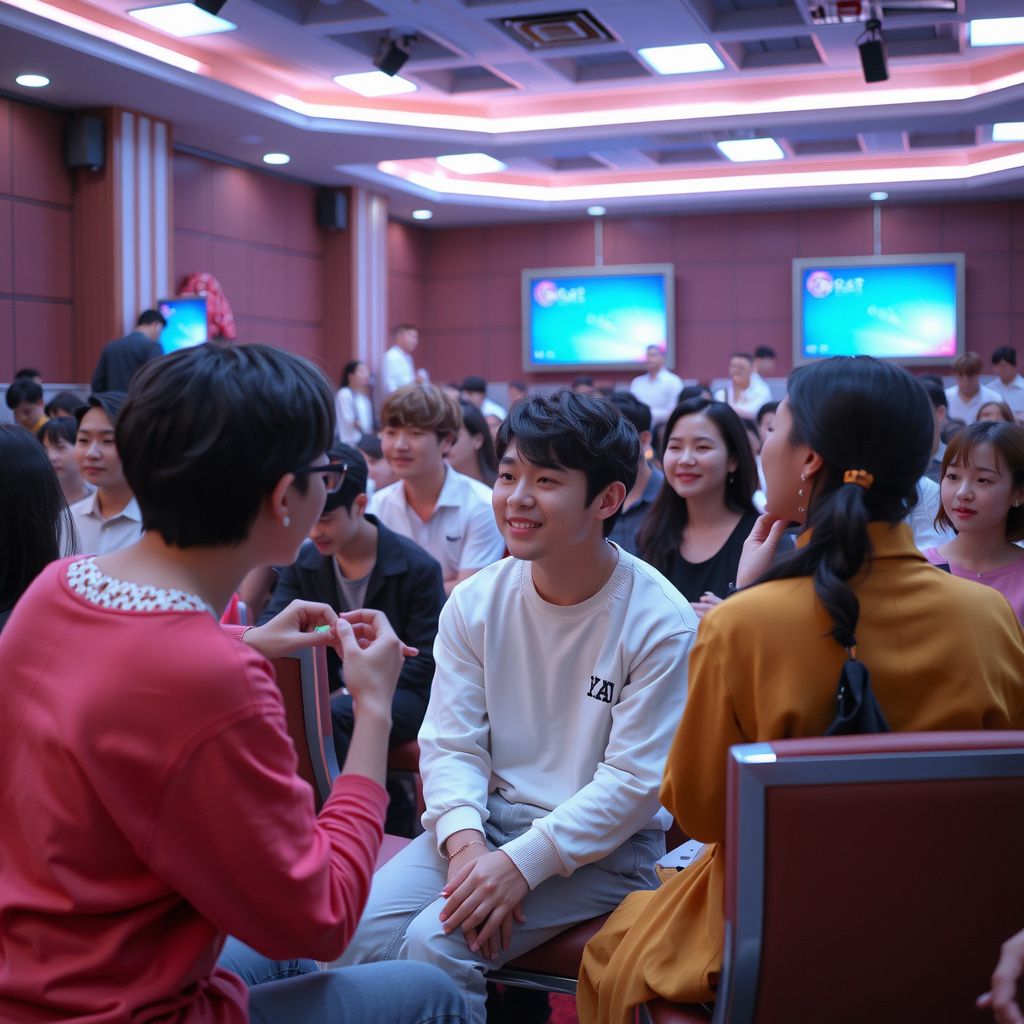
I'm in the back of this big room with A LOT of K-Pop artists. I'm seated, watching Stray Kids dance to their latest song. I'm doing the hand movements with them as I watch. They finish and conversation starts. A question is thrown at my and I answer. More conversation happens. Laughs and camaraderie. The room bustles with movement for a bit. I see SHINee's Key come to the right back corner of the room. I follow, sitting to the left of him. Everyone organizes themselves into something less chaotic: columns and rows. More conversation, laughs and questions for me. I take it all in stride. Key never looks at me, but the vibes between us is like we're a couple. We share a few words between each other, though in the dream, I don't know or hear what I said to him nor him to me. At some point, my mom is there. Later, lunch is being handed out. Somehow, they miss giving me a tray of food and I'm sitting there with nothing to eat. Mom sees that I don't have a tray and is upset. She tells some random kids (3 of them) to give me some food. They all start handing a single item of food to me, when Key grabs 2 trays, one stacked on top of the other, turns around and gives me one. I thank him. I want to hug and kiss him, I resist the urge, remembering where I am.
AI generated interpretation This dream unfolds within a dynamic and communal environment: the bustling backstage or green room of a K-Pop variety show. The gathering of notable artists, the choreography, and the lively exchanges point distinctly toward themes of belonging, admiration, and group identity. From a Jungian lens, the crowd of K-Pop idols may reflect the dreamer's engagement with collective energies — the anima mundi or world soul — representing a desire for meaningful inclusion or shared creativity. Each artist could be seen as a facet of the dreamer's own aspirations, talents, or social persona, while the act of mirroring their hand movements hints at an effort to synchronize with a perceived standard or ideal within a community. The recurring interactions, questions, laughter, and organization of the group into columns and rows show a transformation from chaos to order. This narrative arc can symbolize transitions in waking life — perhaps the movement from a period of uncertainty toward clarity or confidence in social settings. Answering questions and receiving attention positions the dreamer as both participant and subject, caught between observation and active engagement. It may suggest a current phase where the dreamer feels recognized or validated within a peer group, yet still navigates subtle social anxieties about fitting in or being truly seen. Key (from SHINee) takes on an especially significant role, embodying a potential animus figure: the projection of traits the dreamer admires, desires, or seeks to assimilate. The comfortable yet unspoken connection — the unacknowledged 'couple' vibe — speaks of attraction, affinity, and the quietly intense bonds we form in liminal social spaces. Key's act of providing food, especially when the dreamer is overlooked, signifies nurturance, care, and the receipt of emotional sustenance after a moment of exclusion. This archetype might reflect the dreamer's longing for validation from sources they deeply admire, as well as the wish to be chosen or cared for in a unique, notable way. The appearance of the dreamer's mother, upset on their behalf, suggests the emergence of the Great Mother archetype, an inner voice advocating for protection and nourishment. Her intervention to procure food indicates a subconscious recognition of emotional needs neglected or unmet by prevailing circumstances — perhaps hinting at real-life moments where support is expected or required, and distress arises when it is withheld. The food tray itself carries Freudian connotations of basic needs — sustenance as a metaphor for emotional or social fulfillment. At its core, the dream seems to explore the desire for both recognition and intimacy amid communal or performative settings. There is tension between public image and private yearning: resisting the urge to express overt affection toward Key, mindful of the context, suggests a sophisticated self-monitoring mechanism. This might mirror waking-life concerns about appropriateness, reputation, or vulnerability in social scenarios. The narrative invites reflection on how the dreamer asserts their needs within groups, and how they receive or seek comfort from role models, parental figures, or peers. Reflective questions to consider: In what ways do you feel both a part of and apart from your social world? Are there times when your needs are overlooked, and how do you advocate for yourself when this happens? Who are the figures you admire or depend upon for emotional support, and how do you negotiate the balance between longing and restraint? The dream encourages a playful yet honest examination of the boundaries between admiration, desire, and belonging.