 Dream Journal Ultimate
Date: 5/21/2026
By TwentieToo
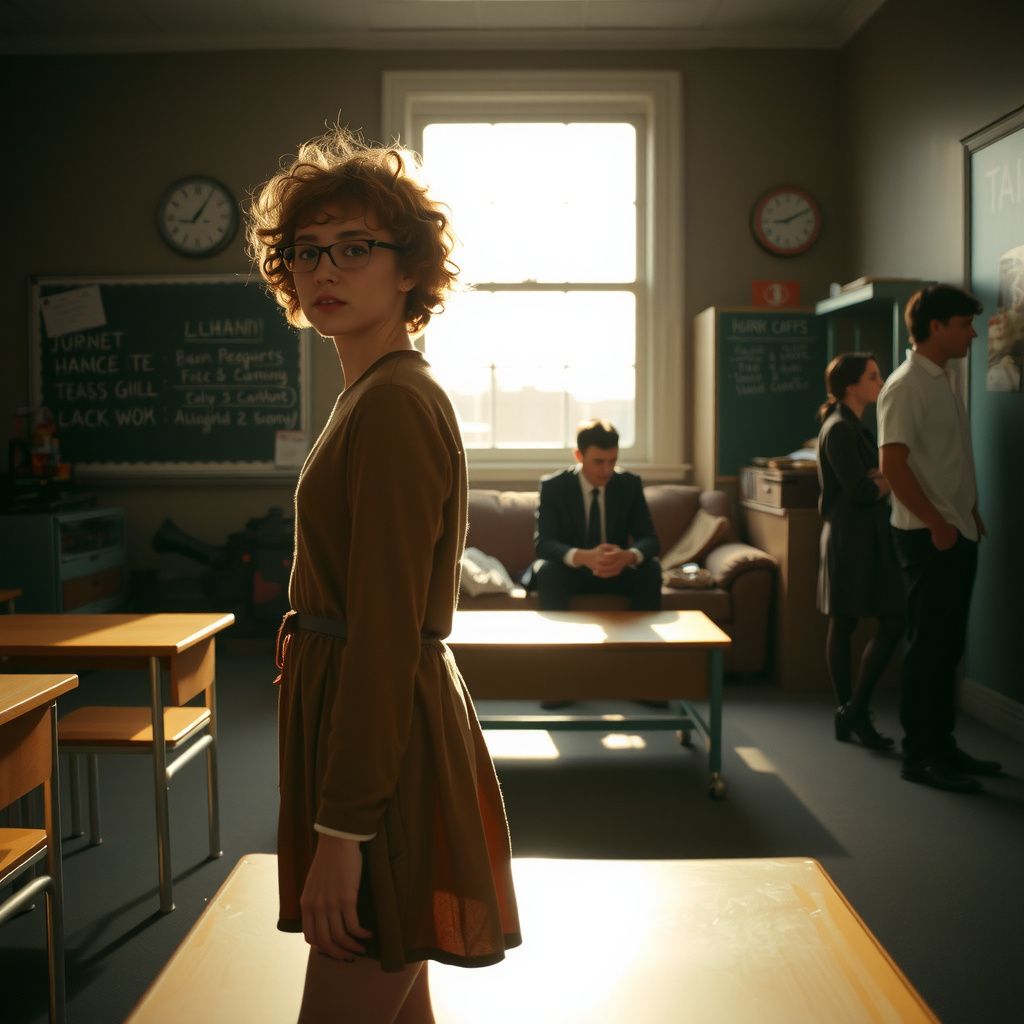
I was a teenager in high school. I was in a class taking pictures down and moving them from the weird open closet to the main part of the classroom to reduce traffic in that corner. That class was getting out. I seemed to be awfully short compared to my classmates. I had curly frizzy hair and glasses. Which sounds very on brand to the in real life highschool version of me. I was also stalling going to my next class. It was writing class but I refused to do my work in there for some reason. We had journals we'd keep in the writing class. I went to go find mine in the pile of journals. It was no where to be found. I go up to the teacher dreading every bit of it. We sit on a couch by the window. He says he doesn't have my journals. I ask him why. He says because it was my last straw. I said but now I don't have my poems that I wrote in there. He nodded shamefully, his head hanging. I said they were some of the most raw poems I've ever written. He said he knows but he was angry with me. He explained that getting homework back with nothing on it except a drawing was infuriating and explained how many times it's happened. I sat there thinking that I didn't draw on my paper that many times. But then other people in the class joined the discussion and getting angry I never did my work. I was confused, it's not like it affected anyone but myself and I wasn't the type to hand in every assignment with a drawing on it. I did it one time. I cut everyone off and said, look into think whats happening here is bandwagoning. The teacher very publicly doesn't like me and now the whole class doesnt like me. I'm quiet and stay to myself and I haven't done any of these things that you guys are saying Im doing. But they interrupted me and started ignoring me. I just stood back watching the sun hit the old thrifted class room couch that was now empty and my teacher and classmates talking about me like I wasn't right there.
AI generated interpretation This dream stages a very human, intimate fear: that the private parts of yourself—the poems, the journals, the small fragile things you make—can be taken, misunderstood, or discarded by the people who hold authority in your life. The teacher in the dream stands as an unmistakable figure of authority and judgment, and his admission that he destroyed your journals as a kind of punishment or “last straw” feels like an enactment of an internalized critic. Those journals and the poems in them are raw, vulnerable self-expression; losing them in front of a classroom turns that private work into public shame. The feeling of being small in that room, physically shorter than classmates and described in the clothes-and-hair detail that echoes your younger self, deepens a sense of exposed identity—that the version of you that made those poems is childlike, unprotected, and easily overridden. Psychologically, the scene sketches a collision between your creative impulse and the social order that polices it. From a Freudian angle, the poems are libidinal energy, unconscious material given form; the teacher’s punitive act represents the superego forcing repression. Jungian imagery points to the teacher as an archetypal authority or shadow figure who is policing the persona you present to the class. The classmates’ swift alignment with the teacher feels like a contagious narrative—bandwagoning and scapegoating—that dramatizes how a social group can conspire to rewrite facts and make you into a single story. Your attempt to cut through that with a logical objection—calling it out as bandwagoning—only to be silenced or ignored captures how powerless it can feel to reclaim your own narrative when everyone else is invested in a different one. Emotionally the dream hangs on humiliation, isolation, and a quiet, simmering injustice. You are not merely embarrassed; you’re witnessing your inner life being erased while you remain present and unseen. The thrifted couch and the windowed light make the scene domestic and ordinary, which intensifies the loneliness: the sun hits the empty couch, bathing the space in warmth while your loss and alienation are left in shadow. That contrast can point to a waking experience where life looks fine on the surface or has small comforts, yet something important about you is missing or at risk—creative work, a sense of being heard, or the right to hold contradictory parts of yourself (the studious kid and the private poet). There is also a theme of misperception and projection. The teacher’s claim about doodled homework and the classmates’ repeating of it feels like a narrative imposed on you—perhaps a real-life echo of being mislabeled, misunderstood, or repeatedly blamed for something you don’t recognize. Dreams often dramatize unresolved interpersonal dynamics; this may reflect current tensions with authority figures, a discomfort about exposing your writing, or a fear that being quiet will be read as guilt or oddness. It’s worth noticing how the dream puts you back into a teenage context: unresolved feelings from that era (embarrassment, identity formation, social exclusion) frequently resurface when current situations touch the same chord. If you take this as a conversational prompt from your unconscious, it’s inviting you to attend compassionately to the parts of yourself that felt discarded. That could mean safeguarding the work you value (a real journal, backups, a trusted reader), naming the internal critic that speaks like the teacher, and practicing small acts of reclamation—reading a poem aloud to yourself, rewriting the story others have told about you, or telling one trusted person what was in those journals. The dream doesn’t condemn you; it asks you to witness the injustice and then decide how to reintegrate what was lost—either by creating anew or by reclaiming voice so that your private expression cannot be so easily thrown away again.