 Dream Journal Ultimate
Date: 7/8/2026
By KionneSleepsOnMarshmellos💟
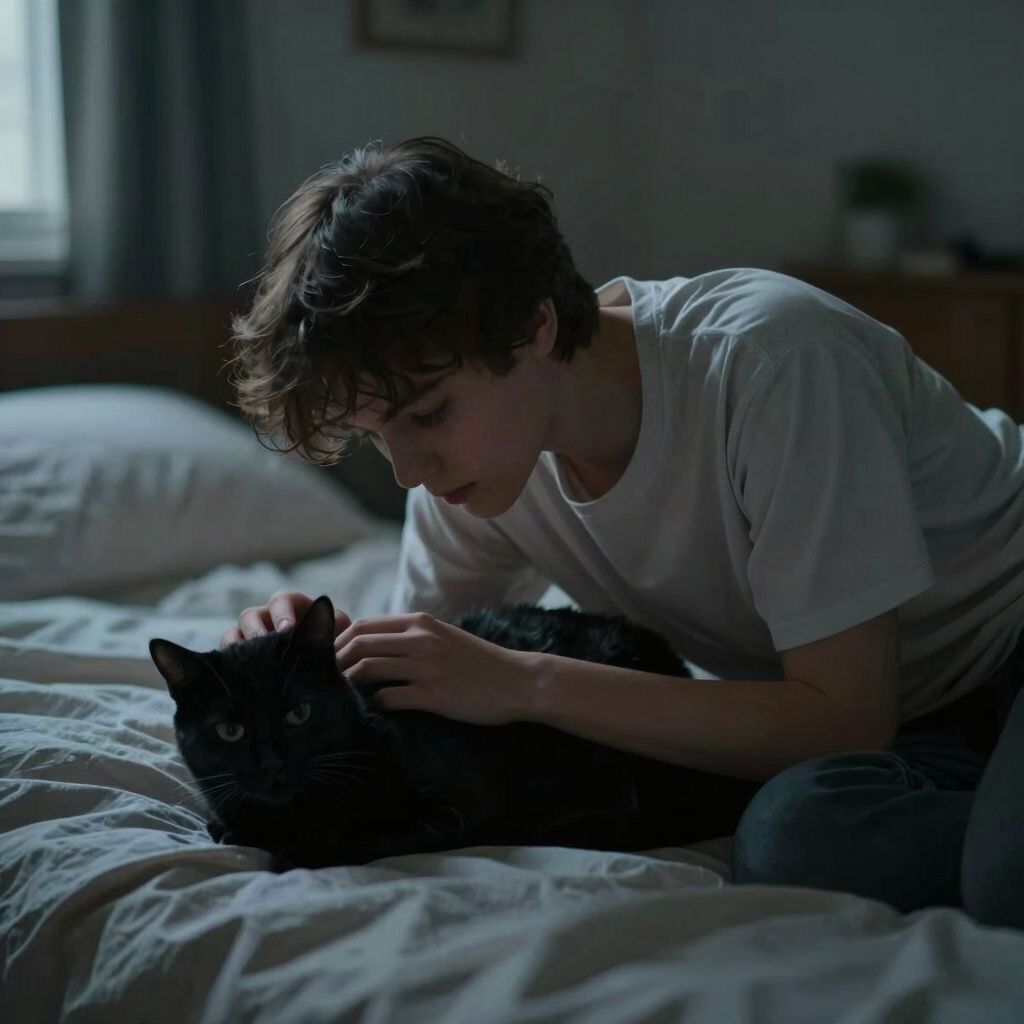
My mom came in my room and gave me another black and she was like this is the new Kayleb and I was like that ain’t Kayleb I was looking at him looked him and up and down and was nope that’s not my cat Kayleb is my cat that died so my mom Left the room and he moved around and my mom had put him on my bed as soon as he left he started crying so I came up to him and was like what’s the matter I petted him hugged him laid him down on my bed then the dream ends
AI generated interpretation The dream opens with a tender but disorienting moment: your mother places “another black” on your bed and calls him the new Kayleb, and you immediately reject that idea. That instant of looking him “up and down” and saying “that ain’t Kayleb” reads like a very human, honest response to loss — a refusal to let a single similarity erase a unique relationship. In symbolic terms, the dream stages the tension between an outer attempt to replace what’s gone and your inner knowledge that some bonds are singular and can’t simply be swapped out. The black cat itself carries archetypal weight. Animals in dreams often embody parts of ourselves — instinctual, intimate, and sometimes linked to the unconscious. A black cat can suggest mystery, mourning, or the unknown aspects of grief. From a Jungian perspective it can be a familiar or shadow figure that returns to be acknowledged; from a Freudian angle, your mother’s offering can look like an effort at wish fulfillment or a practical attempt to soothe a wound. The fact that the “new” cat moves and then cries after she leaves highlights that the emotional reality — loneliness, vulnerability, unfinished sorrow — remains alive even when someone tries to fix the surface. Your response in the dream — approaching the cat, petting, hugging, and laying him down — is a powerful image of care and integration. You don’t push the crying away or accept a quick replacement; instead you become the comforter. Psychologically, that suggests an internal capacity to tend to the part of yourself that mourns. It’s less about refusing consolation and more about offering authentic presence: meeting the difficult feeling with gentleness rather than allowing others to decide when grief is “over.” That nurturing gesture is itself a healing archetype — the inner caregiver who soothes the orphaned or wounded portion of the psyche. Practically, the dream speaks to a waking life dynamic many people recognize after losing a pet or any close companion: family members may cope differently, some wanting to move on quickly, others needing time to honor what was lost. The crying cat suggests there are emotions still seeking attention; your actions in the dream are an invitation to give yourself small rites of care — memory objects, stories, a moment of ritual — rather than letting someone else determine how closure should look. Overall the scene is tender rather than tragic: it shows that your attachment and the uniqueness of Kayleb are intact, and it also shows that you have the capacity to comfort the part of you that still grieves, which is an important step toward gentle acceptance and continued connection with memory.