 Dream Journal Ultimate
Date: 6/11/2026
By Purple
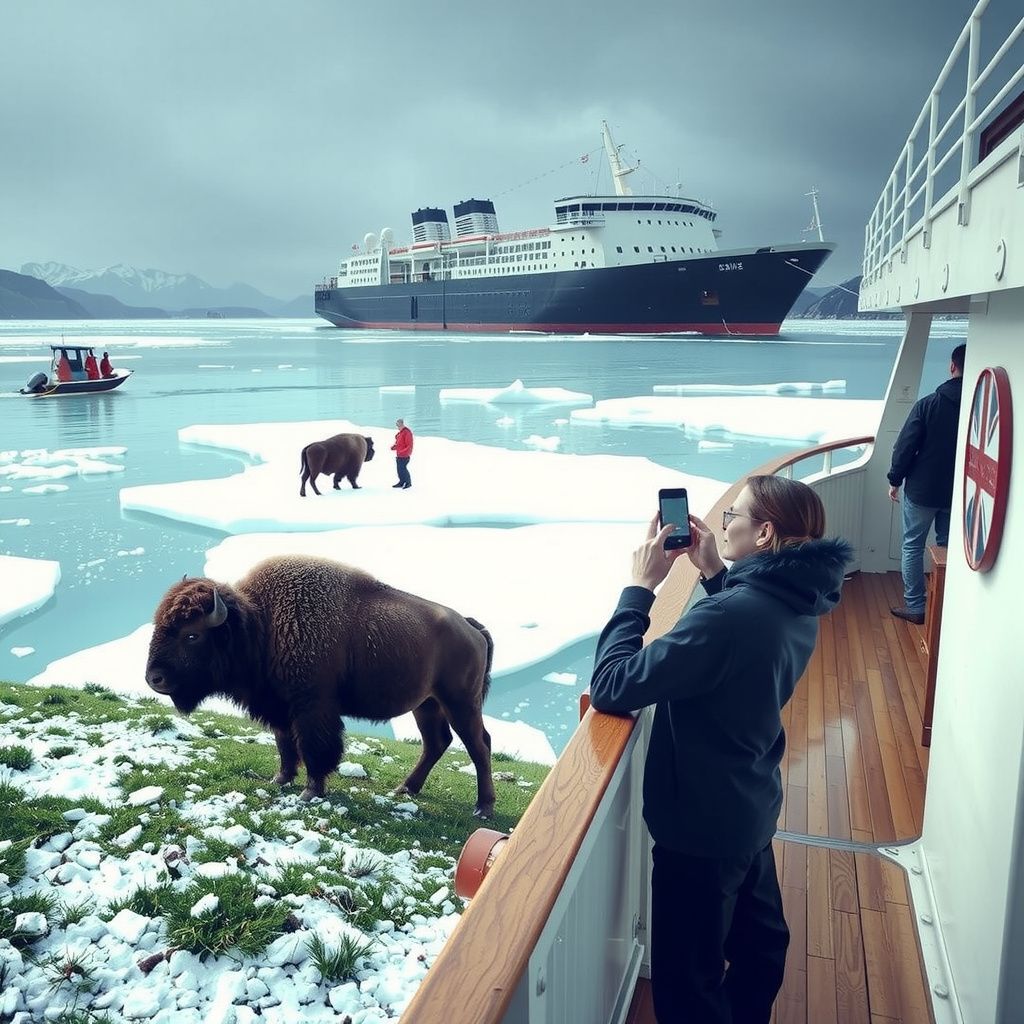
In my dream I was on a large ship. At first we were near home, where the water was calm. Then the water turned frigid. After that, the water was icy. I took out my iPhone to take photos of the water because it changed so quickly and I’ve never experienced this in real life. We passed by other boats and one man in the other boat gave us a friendly wave with a smile. I smiled and waved back, warmed by his friendliness. Beneath us, I saw an occasional man or woman. I think they were on ice caps in the water. I’m not sure if they were barely surviving or if that was a sport of some kind. I was told we were now in Lisbon. I looked at my phone for my location. It was true, because of the time change and my map’s location in the world. We saw lots of animals. Sheep dogs, sheep…and then bison. So many Bison. The bison were all in a grassy area. The bison were somewhat covered in a bit of snow, but the ground seemed to still be green. I was grateful to be dressed comfortably and not be concerned with how cold it was. The whole time, it felt like someone was silently by my side. I’m not sure, but the “energy” felt like someone I’m no longer friends with, Cathy M. (In real life, Lisbon’s temperatures are mild throughout the entire year and their winter season sees rain, not snow.)
AI generated interpretation Dreaming of a large ship immediately frames this as a voyage of the self. In Jungian terms the ship often stands for your conscious ego navigating the larger sea of the unconscious; the changing water — from calm to frigid to icy — reads like the emotional landscape shifting beneath you. That swift change in temperature suggests recent or anticipated transitions: feelings that once felt familiar have become colder or more forbidding. The act of taking photos with your iPhone points to a conscious attempt to witness and preserve these shifts, to make sense of something ephemeral by documenting it. It’s an attentional gesture: you are both traveler and observer, curious about how things are changing and wanting a record of that change for future reflection. The people and boats you encounter introduce social texture to the journey. A friendly wave from a stranger that warms you underscores how small, human connections can feel protective in unfamiliar conditions. Meanwhile, the figures on ice caps below the ship raise an ambiguous note — are they barely surviving or engaging in sport? From a psychological angle this ambiguity can mirror how you’re processing others’ struggles versus choices in the real world: sometimes you watch vulnerability and call it danger, sometimes spectacle. There’s also a subtle comparative stance here — you, warm and secure on the ship, watch others exposed to the cold — which may reflect gratitude for your current supports or a recognition of distance between your position and theirs. The sequence of animals — sheepdogs, sheep, then many snow-covered bison — carries mythic weight. Sheep and sheepdogs evoke familiarity, guidance, and herd dynamics: roles you play in groups or relationships where there’s someone shepherding a direction. Bison, huge and ancient, are archetypal symbols of raw, stubborn life force and ancestral strength; their being covered in snow suggests powerful energies that are dormant, paused, or tempered by a colder climate. Psychologically, this could point to parts of yourself that are powerful but currently subdued, or to traditions and impulses that feel out of season yet still present. Your gratitude about being dressed warmly and unconcerned with the cold speaks to inner resources — resilience, preparation, or emotional insulation — that let you witness these powerful, dormant elements without being overwhelmed. The dream’s geographic detail — being told you’re in Lisbon despite the wintry scene — is revealing. Dreams often remix places to reflect inner realities rather than literal geography; the mismatch nudges at a sense of dislocation or surprise about where you find yourself emotionally. The time-change confirmation on your phone reinforces the theme of shifting contexts: you’re aware, tracking time and place, and noticing that your internal map doesn’t always match external facts. Finally, the quiet presence whose “energy” felt like Cathy M. deserves attention: whether she stands for a particular pattern of relating, an unresolved strand of a past friendship, or an internalized tone of energy, her silent companionship suggests that some aspect of that relationship — perhaps its emotional weather, its ways of being present or absent — is traveling with you. That presence is not intrusive in the dream; it’s felt alongside you, which might mean you are integrating or at least acknowledging that influence rather than being driven by it. Overall, the dream weaves a narrative of observation amid change: you are moving through quick-shifting emotional climates, comfortably resourced, watching both familiar social dynamics and deeper dormant forces. Archetypally it’s a mid-journey scene of individuation — noticing what warms you, what leaves you cold, which parts of the collective or ancestral self are active or asleep. Practically, you might use this image as a gentle prompt: what changes are you documenting in waking life, what energies feel dormant, and what unresolved relational echoes are accompanying you? The dream doesn’t demand answers, only a careful witnessing of the heat and cold present in your inner world.