 Dream Journal Ultimate
Date: 6/26/2026
By KayDeeKay
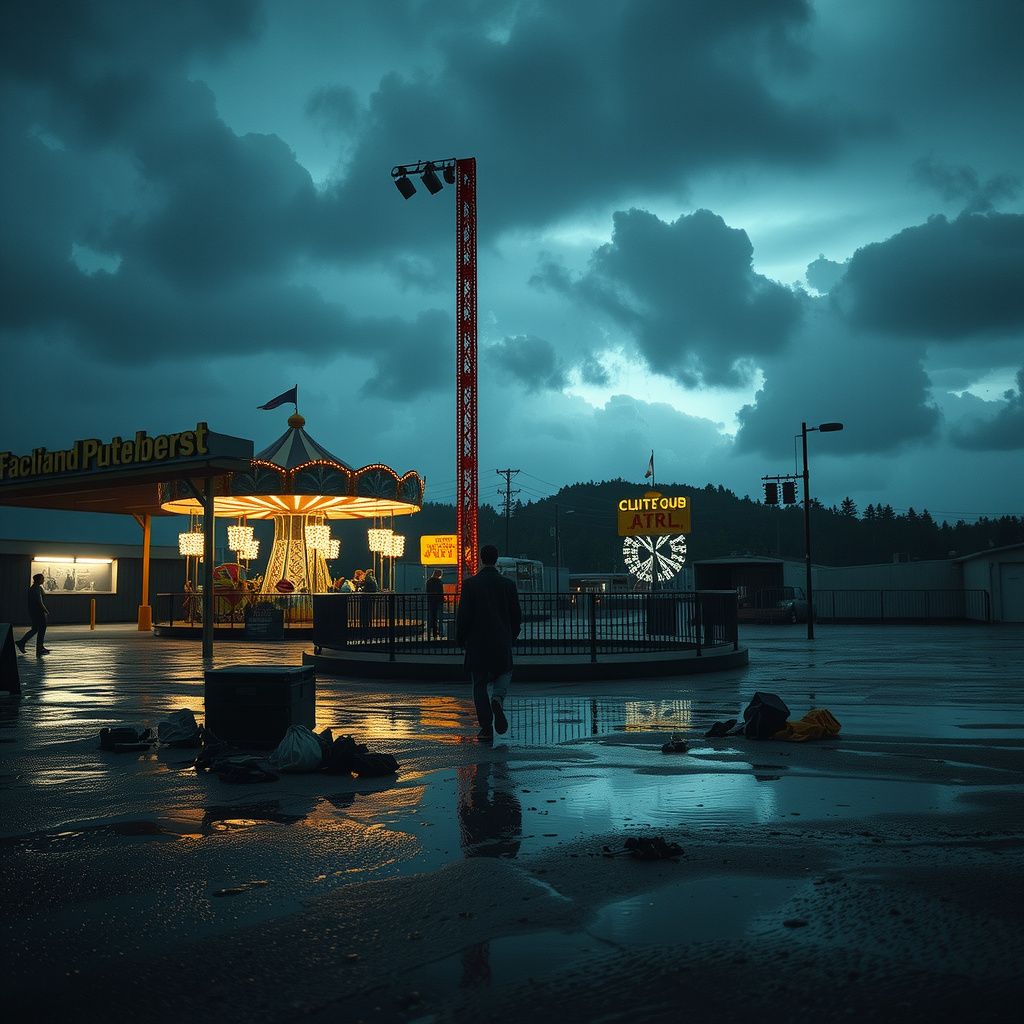
I woke up in my childhood home, but it wasn't quite the same. It reminded me of the "other house" from Coraline. Everything felt a little more colorful. The backyard had been transformed with an elaborate landscape and a pool that had never existed in real life. I woke up alone in my parents' bed. Outside, it was raining heavily. At some point my dad came into the room and told me, I needed to go outside. However, something in my mind told me to "Don't let it in." I never actually saw what "it" was, only that something outside was trying to get into the house. I went to close the large sliding glass doors, but they wouldn't lock properly. Every time I secured one side, the other side would slide open again. I'd fix the left door, and the right would come loose. I'd fix the right, and the left would open back up. Rain kept blowing inside, soaking the floor and even soaking me while I was still inside the house. It felt incredibly unsafe, and I became increasingly nervous to get everything locked. After that, the house seemed strangely empty. My parents were gone, and I was by myself. My phone was almost completely dead, and I then realized something was wrong. I couldn't remember the last five days of my life. It wasn't like forgetting a night after drinking—it was as though an entire stretch of time had simply vanished. In my mind, it was still around the middle of January, but there was a complete gap in my memory. I went upstairs to my old bedroom. The windows were open, and everything inside was damp from the rain. There I found someone I interpreted as an old friend, although I couldn't actually recognize who they were. They were angry with me. When I asked what had happened, they refused to explain, only implying that I had done something terrible during the days I couldn't remember. They were secretive and dismissive, saying something like, "You'll find out soon enough," before leaving me with no answers. I decided I couldn't close the window and sat on my old bed feeling cold and trying to charge my phone more. I began to suspect some kind of entity was stalking me and using me. I then went outside from my window and onto the roof. The backyard was in ruins. A large tree had fallen into the pool, the fence had been knocked down, and the entire yard looked destroyed. My dad was outside trying to clean everything up, and I was told it was all my fault. Apparently the dogs had gotten loose, and I needed to go find them. I saw them running around and then out into the neighborhood while one dog jumped into the pool and I thought it would drown. My mom was nowhere to be found. The overwhelming feeling wasn't guilt as much as confusion—I couldn't understand how I could have caused any of this. I managed to get my phone charging and started looking through my photos, hoping something would trigger my memory. The only evidence I found was a handful of pictures from about five days earlier. They showed me at some strange carnival or and everything in the pictures looked completely normal. I appeared to be having a good time, but after those few photos there was nothing. The gap remained. Since my own car was missing, my dad let me borrow a Tesla (no idea where that came from). But when I got inside, the car wouldn't let me drive. It seemed to take control on its own, speeding through intersections and driving in ways that made me incredibly anxious. I felt trapped because I wasn't the one controlling where we were going. Eventually it brought me back to the carnival. It was mostly packed up by then, rainy and overcast, with people cleaning up after the event. As I walked through the grounds, people looked at me as though they recognized me. It made me feel uncomfortable. Then I realized my wallet and my keys were gone. Suddenly I was stranded. I started retracing my steps through the fairgrounds, searching for everything I had lost while also trying to piece together what had happened during those missing days. The rest of the dream carried the same unsettling feeling. I began wondering if I had been drugged or if something had happened around a New Year's celebration that had erased my memory. No one would answer my questions. Everyone seemed to know what had happened except me, and they all implied that the truth would reveal itself eventually. I spent the entire dream trying to reconstruct those lost days, and was worried that I wouldn't be able to defend myself. I hoped that I would find some kind of clue to prove something happened to me
AI generated interpretation Your dream opens in a version of your childhood home that is familiar and off-kilter at once — colorful like the “other house” in Coraline — and that sets a tone of doubled reality. In Jungian terms the house often stands for the psyche; an altered childhood home suggests that some part of your inner life has shifted or revealed a more vivid, strange aspect of itself. The new backyard and pool feel like newly accessible emotional territory: water often signifies the unconscious, and a pool that “was never there” points to feelings or memories that have recently surfaced. The heavy rain and the repeated failure of the sliding doors to lock capture a visceral sense of boundary violation — you know something should be kept out, but the mechanisms meant to protect you are unreliable. That cyclical closing and reopening of the doors is a strong image of repeated attempts to secure yourself against intrusion, and the fact that you instinctively think “Don’t let it in” feels like an important inner warning about preserving a sense of safety. The missing five days is one of the dream’s clearest emotional centers: a rupture in your personal narrative that leaves you unmoored. Dreams that erase time often mirror waking feelings of disconnection, dissociation, or anxiety about accountability — not necessarily clinical, but human: we fear gaps because they make us vulnerable to accusation, confusion, or shame. The carnival photos functioning as the sole evidence of those days add a second layer: carnivals are liminal places of performance, altered identity, and temporary rules. Freud might point to carnival scenes as moments when usual restraints loosen; Jung would note the carnival as a space where the persona (the mask you show the world) and the shadow (what is hidden) mingle. The contrast between looking “normal” in the photos and having no internal memory of the time heightens the dream’s theme of separateness between outer appearance and inner knowing. Several smaller images reinforce the same pattern: an angry, vaguely familiar friend who won’t explain what you did; your father blaming you for chaos in the yard; the dogs loose; and a car that drives itself. These elements cluster around the experience of losing agency and being judged for actions you can’t recollect. The unnamed friend who hints you’ve done something terrible reads like a personified shadow — the part of inner life that carries reproach, guilt, or disowned acts — refusing to be integrated or explained. The Tesla that won’t let you drive captures an experience of being carried by external systems or habits rather than steering your own direction. The public recognition at the carnival without access to your wallet or keys intensifies a worry about reputation and being stranded without the means to explain yourself. Taken together, these scenes point to an archetypal drama: the individual confronting a fractured narrative and the social consequences of that fracture. Emotionally, the dream is asking you to pay attention to safety, continuity, and ownership of your story. On a psychological level it suggests re-examining where boundaries have been porous — with other people, with substances or situations that loosen memory, or with internal defenses that oscillate between shutting you out and letting too much in. Practically and gently, the dream points toward reconstructive work: collecting external traces (photos, messages, witnesses) to help stitch a lost stretch of time back into the larger narrative of your life, and practicing small grounding routines so that when you wake you feel more anchored. Creatively, the images invite dialogue with the parts of you that are secretive or accusatory: what would happen if you asked the “angry friend” to tell its whole story, or if you went back into the altered house and asked each room what it remembers? Above all, there’s a tender invitation in this dream — not a verdict, but an urging to reclaim agency and to make peace with the parts of your life that feel shadowed. The repeated refusals of others to explain and the eventual slow revealing of clues speak to a process, not a single event: whatever was lost feels recoverable with patience and curiosity rather than accusation. Treat the dream as a compassionate pointer toward boundary work, fact-finding, and reintegration of whatever has been fragmented. You don’t need to have immediate answers; the images are offering you a map for where to look and what kind of care—protective, curious, and steady—might help you feel whole again.